How to Choose the Right Crusher Blade for Your Needs in 2026
In 2026, the choice of a "Crusher Blade" has become critical for industries focused on efficiency and durability. According to John Smith, a leading expert in the crushing industry, “Selecting the right Crusher Blade can greatly impact your production quality.” This highlights the importance of making informed decisions.
With many options available, factors such as material, design, and use-case are vital. A specific blade might not always suit every job. Take time to assess your needs. Sometimes, the best choice calls for deeper reflection. This industry thrives on constant improvement and adaptation.
An effective Crusher Blade is more than just a tool; it is an investment. A wrong choice can lead to inefficiencies and increased costs. The path to selecting the right blade must embrace thoughtful consideration and expert advice. Understanding your requirements is not just a step; it is a necessity.
Understanding Different Types of Crusher Blades for Various Applications
Choosing the right crusher blade can be daunting. Different applications require specific blade types. Understanding these variations will guide your decision.
For example, a rotary blade is excellent for softer materials. It handles tasks efficiently, making it perfect for recycling. In contrast, a hammer blade suits more robust materials. Its design allows for greater impact but may wear out faster.
Always consider the material to be processed. Some blades perform poorly on harder substances. You might notice increased maintenance needs with the wrong choice. Testing different blades offers insight but can be time-consuming. Evaluating performance over time is crucial. Each project may reveal unexpected challenges. Reflection on these experiences can lead to better choices in the future.
How to Choose the Right Crusher Blade for Your Needs in 2026
| Blade Type |
Material |
Application |
Ideal for |
Advantages |
| Single Shaft Shredder Blade |
High Carbon Steel |
Plastic Recycling |
Automotive Industry |
Durable, Efficient Cutting |
| Dual Shaft Shredder Blade |
Tool Steel |
Wood Processing |
Construction Waste |
High Resistance to Wear |
| Granulator Blade |
Alloy Steel |
Plastic Granulation |
Petrochemical Sector |
Fine Particle Processing |
| Cutter Blade |
Stainless Steel |
Sheet Metal Processing |
Manufacturing |
Rust Resistance |
| Horizontal Shaft Impactor Blade |
High Manganese Steel |
Aggregate Crushing |
Mining |
Effective in Hard Material |
Evaluating Material Properties to Select the Optimal Blade Material
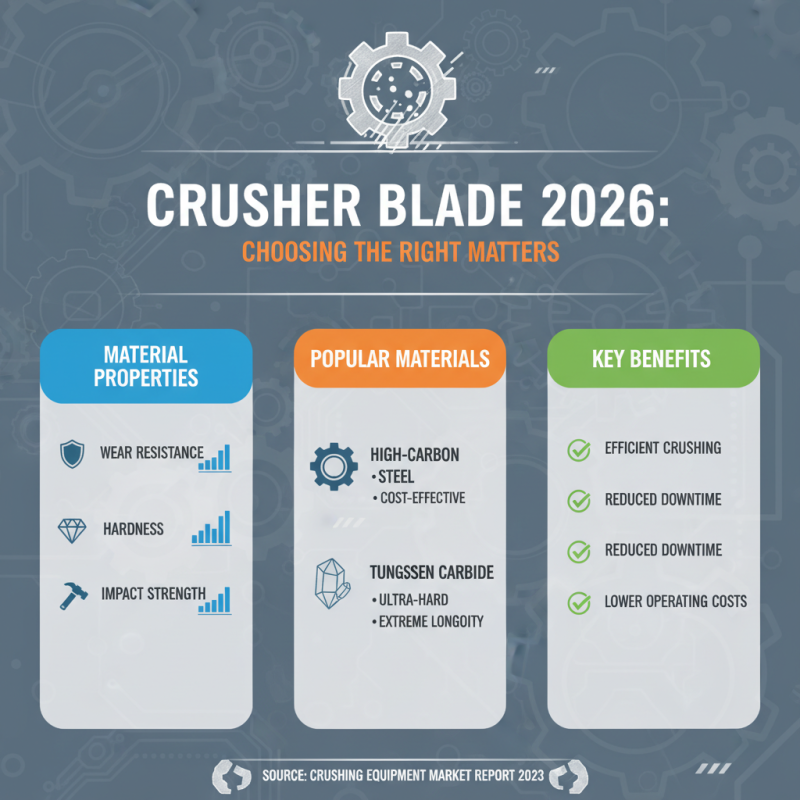
Choosing the right crusher blade in 2026 hinges on understanding material properties. Typically, the blade material affects wear resistance, hardness, and impact strength, which are critical for efficient crushing. According to the "Crushing Equipment Market Report 2023," materials like high-carbon steel and tungsten carbide are popular. They provide excellent durability under extreme conditions.
Evaluating specific material properties is essential. For instance, blades made from high-carbon steel can withstand up to 65 HRC in hardness. However, they may lose toughness if not properly tempered. Meanwhile, tungsten carbide blades offer superior hardness but can be brittle. This brittleness can lead to unexpected failures in demanding applications.
Industry experts suggest a balance between hardness and toughness. It’s crucial to consider the materials being processed. For softer materials, a hard blade may not be necessary. Conversely, harder materials demand more robust solutions. Many businesses face challenges when selecting optimal blade materials. Each application has unique requirements that need careful assessment.
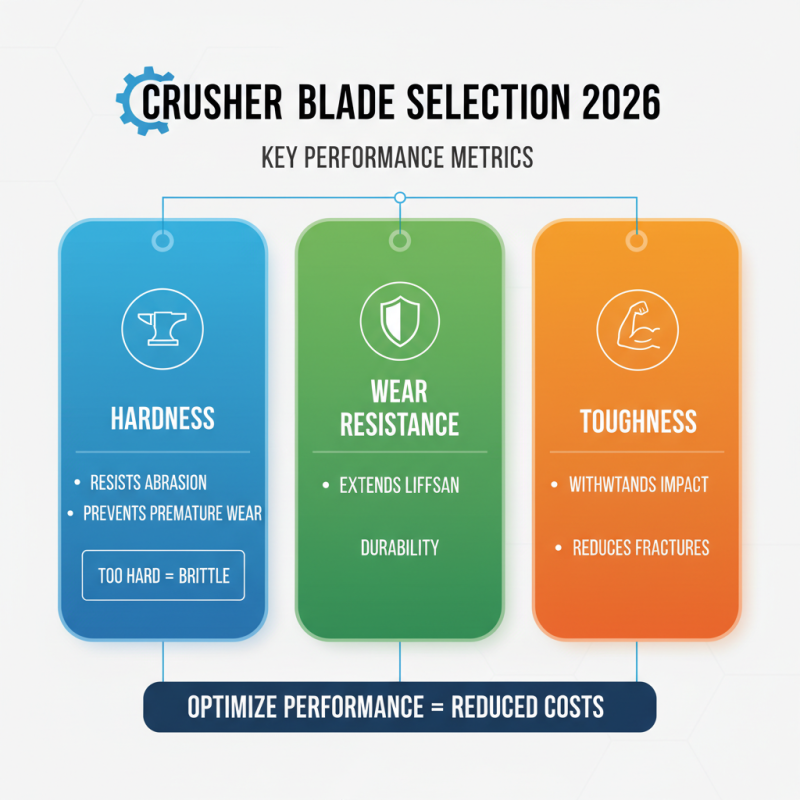
Key Performance Metrics: Hardness, Wear Resistance, and Toughness
Choosing the right crusher blade in 2026 hinges on specific performance metrics: hardness, wear resistance, and toughness. Hardness is vital for any blade. It determines how well the blade can withstand abrasive materials. The right hardness prevents premature wear and extends its lifespan. However, achieving optimal hardness can be tricky. Too hard, and the blade becomes brittle.
Wear resistance is another critical factor. A blade with high wear resistance can handle more abrasive materials without degrading quickly. This is essential for industries dealing with challenging substances. Yet, focusing solely on wear resistance can lead to compromises in other areas, like toughness.
Toughness is equally important. A tough blade can absorb impact without cracking. If a blade lacks toughness, it may fail unexpectedly during operation. Balancing these metrics is essential. It’s not just about numbers; practical testing is key. Sometimes, the best blade isn’t the one with the highest rating. Real-world performance may differ significantly. Assessing the specifics of your application can lead to better decisions.
Analyzing Industry Standards and Innovations in Crusher Blade Design
Choosing the right crusher blade in 2026 means understanding industry standards and innovations. Today’s crusher blades are designed using advanced materials. They feature better durability and efficiency. New developments focus on reducing wear and maximizing output. A properly selected blade can greatly enhance your operations.
Tip: Always evaluate the types of materials you will process. Consider the hardness and abrasiveness. This information helps in selecting the right blade.
Recent trends include the incorporation of eco-friendly materials. Such innovations aim to minimize environmental impact while maintaining performance. However, not all innovations may suit every application. It’s essential to assess if new designs meet your specific needs.
Tip: Stay updated on industry advancements. Attend trade shows or webinars. Engaging in discussions can provide insights and spark ideas. Experiment with different materials to see what works best.
Cost-Effectiveness: Balancing Quality and Price in Crusher Blade Selection
When selecting a crusher blade, balancing quality and price is crucial. Many users tend to focus only on the cost, overlooking the long-term benefits of investing in a high-quality blade. A cheaper option might save money upfront, but it may require more frequent replacements, leading to higher overall costs. This trade-off is often not clear until damage occurs or performance drops.
Tip: Always assess your usage needs before making a purchase. Are you processing softer materials, or do you need to handle tougher materials? Understanding your specific requirements can prevent unnecessary spending.
Another important aspect is understanding the material of the blade. Cheap blades often use inferior materials, resulting in quicker wear and tear. This can significantly impact productivity. A high-quality blade might cost more initially, but the durability and efficiency can outweigh the price difference over time.
Tip: Compare performance results with different blades. Seek feedback from other users or industry experts. Their experiences can guide you toward smarter investments. Always ask about warranty options too. A good warranty often indicates the manufacturer's confidence in their product.
Cost-Effectiveness of Crusher Blades in 2026