2026 Top Trends in Cobalt Alloy Applications and Innovations
Cobalt alloys are gaining attention in various high-performance applications. Dr. Emily Chen, a leading expert in metallurgical engineering, once stated, "Innovation in cobalt alloys can redefine manufacturing limits." This insight captures the essence of current innovations in the cobalt alloy industry.
In 2026, several trends are emerging that highlight the versatility of cobalt alloys. Industries like aerospace and healthcare are particularly focused on these materials. They offer strength, corrosion resistance, and thermal stability. For instance, advanced cobalt-based superalloys are being utilized in jet engines. This enhances durability, ensuring safety in aviation.
Yet, challenges remain. Not every cobalt alloy performs well in all conditions. Some may face fatigue or wear issues in extreme environments. It suggests a need for continued research and refinement of these materials. The potential of cobalt alloy applications is immense, but careful consideration is necessary for optimal results.

Emerging Applications of Cobalt Alloys in Aerospace Engineering
Cobalt alloys are making waves in aerospace engineering. Their unique properties include high strength and excellent resistance to heat and corrosion. In recent years, demand for these materials has surged. Reports predict a growth rate of 5.6% in the aerospace sector by 2026. This growth can be attributed to the increasing need for lightweight, durable materials in aircraft design.
One emerging application is in jet engine components. Manufacturers are exploring cobalt-based superalloys for turbine blades. These materials can withstand extreme temperatures and pressures. Data shows that using cobalt alloys can extend the lifespan of engine components by over 30%. This remarkable durability allows for longer maintenance intervals, which is crucial for airlines aiming to reduce downtime.
Tips: Consider the environmental impact when using cobalt alloys. Mining cobalt can pose significant ecological challenges. It’s essential to weigh these factors against performance benefits. Also, continuous research and development will play a vital role in refining alloy compositions. By pushing boundaries, the aerospace industry can achieve even greater innovations. Balancing these needs is crucial for sustainable growth in aerospace engineering.
Innovations in Cobalt Alloy Manufacturing Techniques
Innovations in cobalt alloy manufacturing have gained significant momentum recently. Advanced techniques are emerging to improve efficiency and sustainability. For example, additive manufacturing allows precise control over materials. This technique enables the production of complex shapes that were previously difficult to achieve. It reduces waste and optimizes resource use, but it still faces limitations in scalability.
Another exciting development is the use of new alloys that enhance performance. These materials provide superior corrosion resistance and strength. Some alloys even exhibit unique electric and thermal properties. However, research in this area often requires long timelines and substantial investment. The cost-effectiveness of these innovations remains a question, particularly for small-scale applications.
Lastly, recycling cobalt alloys is becoming increasingly important. Innovative processes are being developed to reclaim these materials. This significantly reduces environmental impact. Nevertheless, the technology is still evolving. Challenges such as contamination during recycling persist. As these techniques progress, they may transform how cobalt alloys are produced and used in various industries.
Cobalt Alloys in Energy Sector: Trends and Developments
As the energy sector evolves, cobalt alloys play a crucial role. Their heat resistance and durability make them suitable for high-performance applications. These alloys do well in extreme conditions, such as those found in turbines and reactors. Increasing reliance on renewable energy sources enhances the demand for cobalt alloys. They are key in improving the efficiency of energy systems.
Tips: When selecting cobalt alloys, consider the specific requirements of your application. Testing in real-world conditions can reveal their performance. Regular assessments are necessary to identify potential weaknesses.
Innovations in alloy engineering are underway. Researchers are developing new compositions that enhance performance while reducing costs. Many are looking at sustainability, seeking alternatives that maintain quality. It’s necessary to balance innovation with practicality. Some new materials may not yet face rigorous testing standards.
Tips: Be open to new ideas but cautious with unproven technologies. Collaborate with experts to evaluate new materials. Thorough research is essential to avoid future failures in application.
Advancements in Cobalt Alloys for Medical Devices and Implants
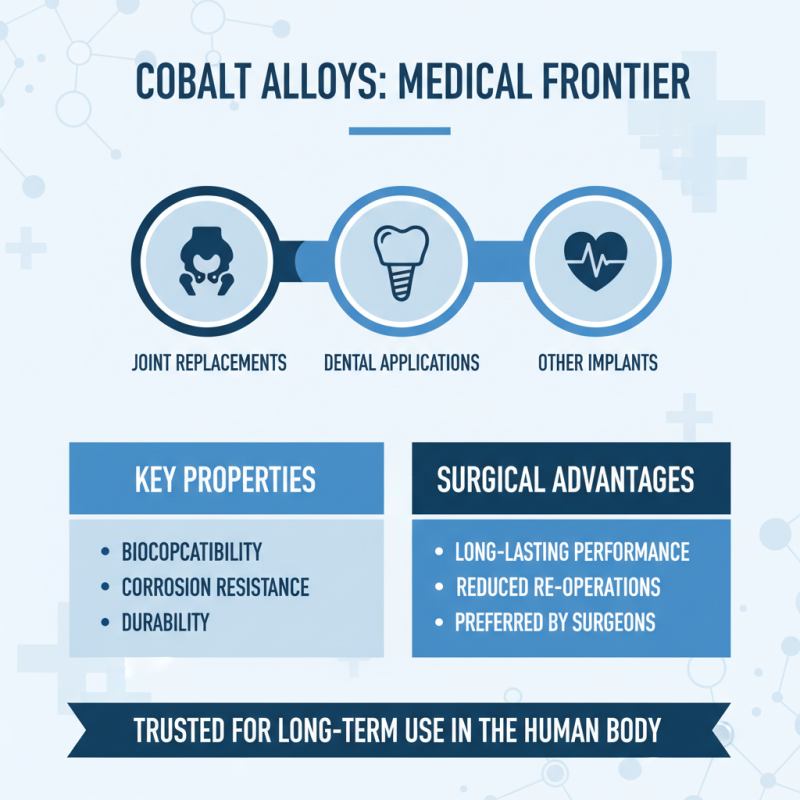
Cobalt alloys play a crucial role in the development of medical devices and implants. These materials are known for their excellent biocompatibility and corrosion resistance. Surgeons often prefer cobalt-based implants for joint replacements and dental applications. They offer long-lasting performance, making them suitable for long-term use in the human body.
However, challenges remain in perfecting their usage. Implant failures can still occur due to wear and fatigue over time. Researchers are actively seeking solutions to improve the longevity of cobalt alloys. Optimal alloy compositions and advanced processing methods are crucial. Some studies suggest that integrating other elements can enhance performance but may complicate production. A careful balance must be achieved in these innovations.
The ongoing advancements in cobalt alloys are promising. New coatings and surface treatments are being tested. They aim to reduce wear and improve integration with bone. Moreover, 3D printing technologies offer exciting potential for creating customized implants. Yet, it's a work in progress, and ongoing research is necessary. The journey towards flawless application in medical devices continues, marked by both innovations and needed improvements.
Sustainability and Recycling Practices in Cobalt Alloy Production
Sustainability is becoming vital in cobalt alloy production. The industry faces pressure to reduce its environmental impact. In 2023, a report indicated that cobalt extraction generates around 1.5 million tons of CO2 annually. This number is a stark reminder of the urgent need for change. Many companies are now investing in recycling practices to address these concerns.
Recycling cobalt alloys can significantly lower emissions. Studies show that recycling can cut production-related emissions by up to 70%. However, challenges still exist. The recycling process can be inefficient, often requiring advanced technology that is still developing. Overcoming these hurdles is essential for the industry’s transition to sustainability.
Moreover, ethical sourcing remains a major issue. A significant portion of cobalt is mined from regions with questionable labor practices. Addressing these concerns through responsible sourcing is crucial. Innovators in the field are working on cleaner production methods and promoting circular economies to ensure a more sustainable future for cobalt alloys. The journey is far from perfect, but awareness is a key step forward.