The Future of Nickel Base Alloy: Innovations Driving High-Performance Applications
The evolution of Nickel Base Alloy technology is pivotal in meeting the demands of high-performance applications across various industries, ranging from aerospace to energy. As innovations continue to emerge, industry experts like Dr. Emily Chen, a leading metallurgist at Advanced Materials Research Institute, emphasize the transformative potential of these alloys. "The future of Nickel Base Alloys lies in their ability to enhance performance while also addressing sustainability challenges,” she states. This perspective underscores the dual focus on achieving superior properties and reducing environmental impact.
As we navigate through the complexities of modern engineering requirements, the significance of Nickel Base Alloys becomes ever more pronounced. These materials are engineered to withstand extreme environments, exhibiting exceptional resistance to heat and corrosion. The exploration of new manufacturing techniques and alloy compositions is propelling the industry forward, paving the way for groundbreaking applications. This attention to innovation positions Nickel Base Alloys as a cornerstone for advancements in high-stakes fields, ensuring they remain relevant and effective in the face of ongoing technological changes.

Innovative Manufacturing Techniques for Nickel Base Alloys in Aerospace Applications
Innovative manufacturing techniques for nickel base alloys are poised to transform aerospace applications, particularly with the rise of additive manufacturing.
This approach facilitates the production of complex geometries and tailored material properties, making it highly suitable for aerospace demands.
The growing prevalence of specialized metal powders in additive manufacturing is expected to spark a significant market trend.
As companies shift towards more sustainable and efficient production methods, the North American metal powder market is evolving to accommodate this need, supporting the development of advanced nickel base alloys.
The advancements in metal 3D printing technology enhance the ability to create high-performance components with reduced lead times and material waste.
Notably, the demand for nickel-based superalloys is anticipated to surge, with projections indicating a market size hitting USD 26.61 billion by 2034.
Innovations such as high-throughput preparation methods for alloy composition design are paving the way for more efficient and effective manufacturing processes,
further driving the integration of these advanced alloys into the aerospace sector and beyond.
Advancements in Corrosion Resistance of Nickel Base Alloys for Marine Environments
The advancements in corrosion resistance of nickel base alloys, particularly for marine environments, are critical as industries continue to seek materials that can withstand harsh conditions. Recent reports suggest that the stainless steel seamless pipes market is projected to reach USD 5.15 billion by 2030, underlining the increased demand for corrosion-resistant materials. Nickel base alloys, known for their superior strength and resistance to pitting and crevice corrosion, are becoming increasingly relevant in applications exposed to seawater and other corrosive elements.
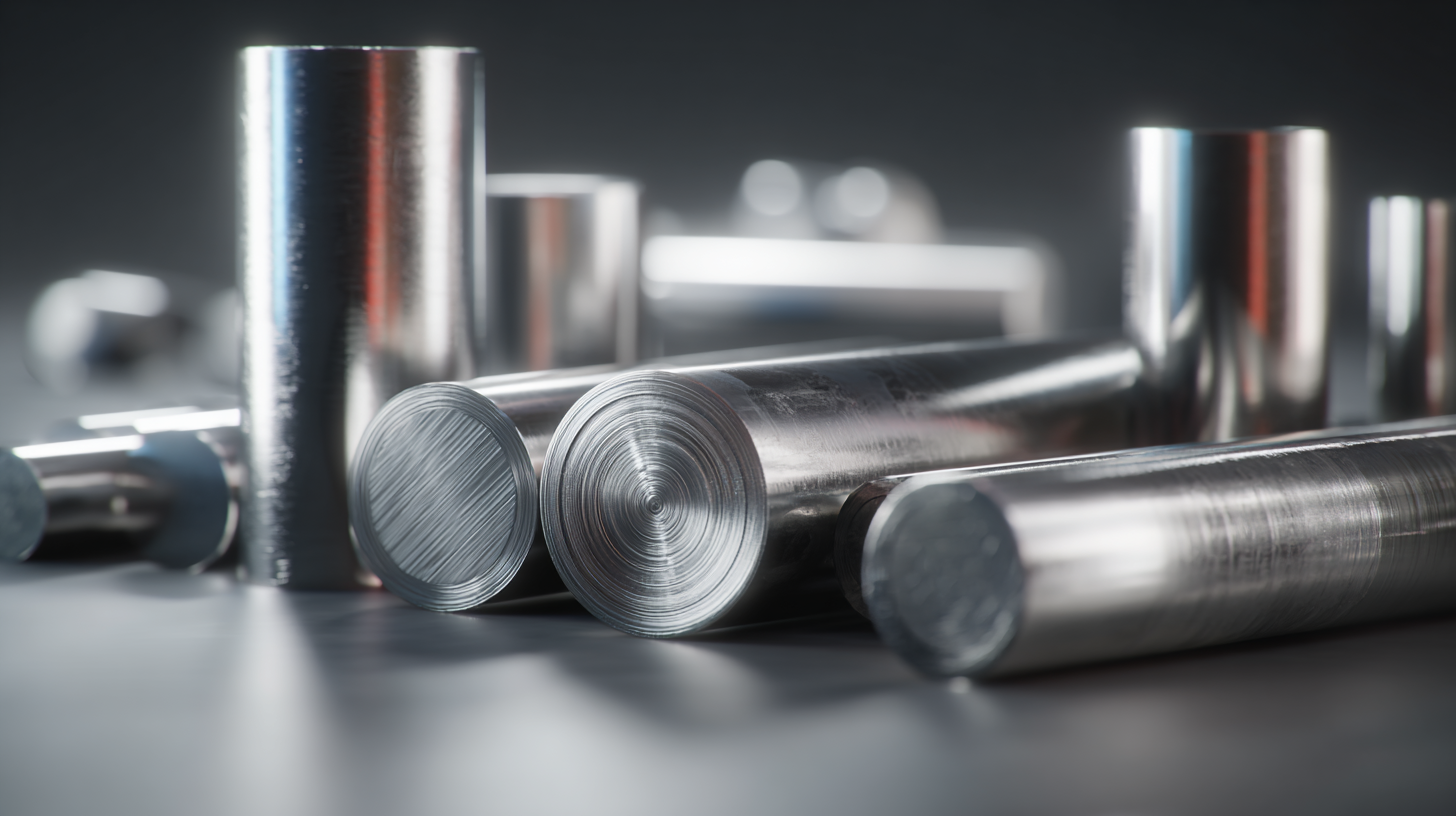
Recent developments in functional nanocomposites have further enhanced the anticorrosion properties of these alloys. By integrating nanoparticles, researchers are creating coatings that not only improve corrosion resistance but also provide flame retardant properties. This dual functionality is vital for marine applications where both fire safety and durability are paramount. As the industry evolves, the focus on innovative materials like advanced nickel base alloys and nanocomposites will play a pivotal role in driving performance and ensuring the longevity of structures in demanding environments.
Emerging Trends in Nickel Base Alloys for Energy Generation and Storage Solutions
Emerging trends in nickel base alloys are set to revolutionize energy generation and storage solutions, primarily driven by the need for higher efficiency and durability in applications like wind, solar, and battery technologies. These advanced materials exhibit exceptional resistance to high temperatures and corrosive environments, making them ideal for use in power plants and renewable energy systems. As the demand for clean energy intensifies, the development of innovative nickel base alloys will enable the creation of more efficient turbines and reactors, optimizing energy conversion processes.
Furthermore, the integration of nickel base alloys in energy storage solutions has profound implications for the future of battery technology. These materials can enhance the performance of electrodes in lithium-ion batteries, offering improved conductivity and longevity. Research is focusing on the incorporation of nickel base alloys with other elements to create hybrid materials that boost energy density while maintaining structural integrity. This innovation paves the way for the next generation of energy storage systems that are not only more sustainable but also capable of meeting the rapidly growing global energy needs.
The Future of Nickel Base Alloy: Innovations Driving High-Performance Applications
This chart illustrates the emerging trends in nickel base alloys for energy generation and storage solutions over the past five years, highlighting innovations in performance metrics such as thermal stability, corrosion resistance, and energy density.
Optimizing Mechanical Properties of Nickel Base Alloys for High-Temperature Applications
Nickel base alloys are increasingly recognized for their exceptional mechanical properties, particularly in high-temperature applications. The optimization of these alloys is crucial for sectors such as aerospace, automotive, and petrochemical industries, where performance and reliability under extreme conditions are paramount. Researchers and engineers are focusing on various strategies, including microstructural refinement and the incorporation of various alloying elements, to enhance creep resistance, tensile strength, and thermal stability.
Innovations in processing techniques, such as additive manufacturing and advanced heat treatment, are pivotal in achieving the desired mechanical properties. These methods allow for precise control over the microstructure, resulting in enhanced performance characteristics tailored for specific applications. Additionally, the development of novel nickel base alloys with superior oxidation and corrosion resistance further extends their usability in challenging environments. As the demand for high-performance materials continues to grow, the future of nickel base alloys looks promising, driven by ongoing innovations that push the boundaries of traditional engineering.
Digital Transformation in the Production of Nickel Base Alloys: From Design to Deployment
The digital transformation of nickel base alloy production is paving the way for advanced application in high-performance sectors such as aerospace and defense. Innovations such as
Integrated Computational Materials Design (ICMD) software revolutionize the alloy design process, enabling rapid simulations for material performance and qualification. This technology not only accelerates the
development cycle but also enhances the optimization of manufacturing processes, drastically reducing lead times and costs.
According to market insights, the aerospace materials market is projected to reach $23.8 billion by 2027, indicating a growing demand for innovative materials solutions.

Additive manufacturing has emerged as a pivotal technology within this landscape, particularly for the Department of Defense's industrial base. This method allows for the efficient production of complex parts that were previously either too costly or impossible to manufacture using traditional techniques.
Reports show that additive manufacturing can reduce production costs by 50% and significantly lessen material waste, propelling the nickel base alloy sector into a new era of cost-effectiveness and efficiency. By leveraging digital tools and advanced manufacturing, the nickel base alloy industry is set to meet the increasing demands for durable and lightweight materials in high-stakes applications.